


Grandfather’s WWI Service Record Reconstructed
From Carthage to France and Home Again, 1917–1919
When Everett Edward Reed entered the United States Army in September 1917, he was a young man from Carthage, New York, not quite twenty-two years old. By the time he returned home nearly two years later, he had crossed the Atlantic twice, served overseas with an Army engineer organization, spent time in occupied Germany, endured at least two periods of hospitalization, and finally returned to the United States aboard a hospital ship.
Much of Everett’s individual Army personnel file was apparently among the millions of records destroyed in the disastrous 1973 fire at the National Personnel Records Center in St. Louis. Fortunately, other surviving records—including New York State service records, Army rosters and morning reports, troopship passenger lists, photographs, and family material—allow much of his story to be reconstructed.
Into the Army
Everett Edward Reed was born December 17, 1895, at Hermon in St. Lawrence County, New York. By 1917 he was living in Carthage.
In September of that year, local newspapers published the names of 86 men who were to leave the Gouverneur area for the National Army. Everett E. Reed of Carthage was among them.
His official New York service abstract gives his induction date as September 21, 1917, through Local Board No. 3 at Gouverneur. Other surviving records use September 22, apparently reflecting the day the contingent actually departed.


The Army assigned Everett service number 1,667,758.
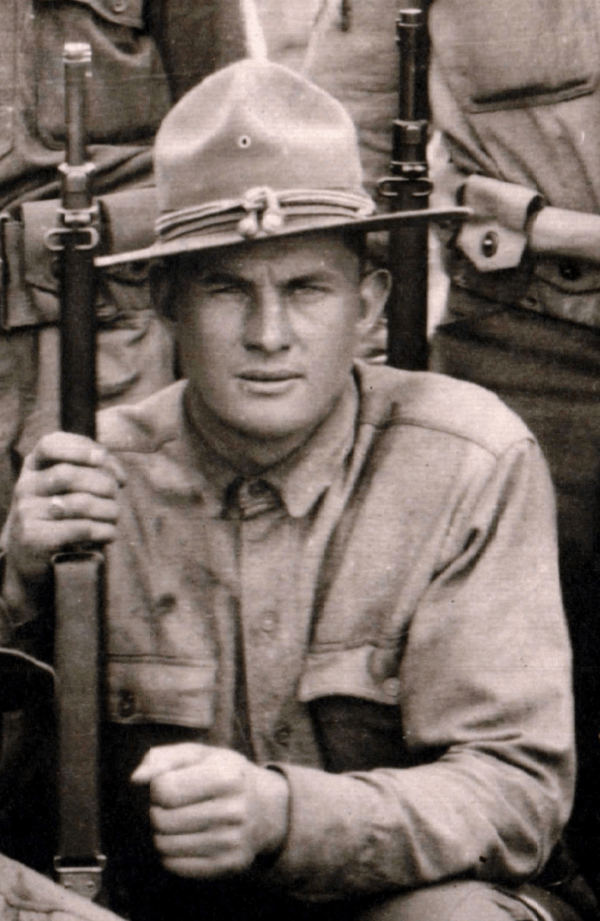
Eventually he became a private in the 301st Engineer Train, part of the 76th Division organization. A surviving photograph of Everett bears a typed identification from the Eichler Studio:
“Reed, E. E. — 1 Liberty St., Carthage, N.Y. — Train 301 Eng. — Mother Mrs. S. R.”
Fort Devens Museum has provided a large panoramic view labeled “Engineer Train — Camp Devens, Mass. — June 1918.” Everett can be identified among the soldiers in the photograph.


Overseas
In July 1918 Everett and the 301st Engineer Train headed overseas.
A surviving Army passenger list places Pvt. Everett E. Reed, 1667758, aboard the Durham Castle, sailing from Montreal in July 1918. He gave his mother, Mrs. Sarah Reed of 58 Champion Road, Carthage, as his emergency contact.
His New York service abstract records his overseas service as beginning July 10, 1918.
A roster taken at midnight on July 31, 1918, shortly after his arrival overseas, provides particularly important evidence. Everett is listed by name and service number as a member of the 301st Engineer Train.

The history of the associated 301st Engineers records the organization’s arrival at St. Amand, France, on July 31. During the following months the engineers served in support of American operations, including work in the Toul and St. Mihiel sectors, and later moved with American forces into Germany.
The surviving records do not allow us to place Everett personally at every location or action described in the regimental history. What they do establish is that he continued to be carried on the rolls of the 301st Engineer Train.
By the winter of 1918–1 919, those records place the Engineer Train with American occupation forces in Germany.

The First Hospitalization
The morning reports of the 301st Engineer Train give us an unusually personal glimpse into Everett’s final months overseas.
On February 25, 1919, the unit clerk recorded:

“Pvt. Reed, Everett E., 1667758 — fr duty to Hosp.”
Everett had gone from duty to the hospital.
We do not yet know the reason for this hospitalization or exactly how long it lasted. But it was not continuous through the following month. The roster of the 301st Engineer Train taken at midnight on March 31, 1919, lists Everett normally among the unit’s privates. Other soldiers on that same roster are specifically marked “Sk. in Hosp.”—sick in hospital—while Everett has no such notation.
H e had apparently returned to duty.
Back to the Hospital
Only four days later, something changed.
The morning report for April 4, 1919, records Everett’s status changing from duty to:
“Sk. in Hosp.” — Sick in Hospital.

This second hospitalization proved much more serious or prolonged.
When the 301st Engineer Train prepared its roster on April 30, Everett was still listed as one of its men. Beside his name appears the notation:
“Sk. in Hosp. since Apr. 4th.”
The roster was prepared at Brohl, Germany. Everett himself, however, was already absent from the unit in the medical system, so the record does not establish that he was physically at Brohl on April 30.
Another surviving record introduces an intriguing piece of the puzzle. Everett’s New York service abstract contains the notation:
“ F Hosp 303 – Sn Tn 301 to disch”
This appears to refer to Field Hospital 303 of the 301st Sanitary Train.

The April 1919 morning reports for Field Hospital 303 survive and have now been located, but they primarily account for the hospital unit’s own personnel rather than listing its patients. Everett has not been found by name in them.
For that reason, we cannot yet document exactly when or where Field Hospital 303 treated Everett. The notation may represent part of the medical system through which he passed after leaving the Engineer Train rather than a permanent transfer to the Sanitary Train.
That distinction matters because the contemporary records continue to identify Everett with the 301st Engineer Train.
“Flat Foot”
By early May, the Army had decided to send Everett home.
On May 7, 1919, he was placed aboard the U.S. hospital ship Mercy at St. Nazaire, France.

The ship’s passenger list identifies him as:
REED, EVERETT E. — 1667758 — PVT. — 301 ENGRS. TR.
And beside his name is the medical condition for which he was being returned:
“FLAT FOOT.”

Today that diagnosis might sound surprisingly minor. For a soldier, however, a disabling foot condition could interfere seriously with prolonged standing, marching and other physical duties. We cannot yet say whether Everett’s February hospitalization was related to the same condition. We can say that after his second hospitalization began on April 4, he never returned to his Engineer Train before being evacuated to the United States.
For his emergency contact on the return voyage, Everett listed Mrs. Mildred Stewart, 141 Academy Street, Watertown, New York. Mildred is his aunt, sister of mother Sarah Lawrence Reed.
The Mercy reached Hoboken, New Jersey, on May 25, 1919.
Family records indicate that Everett was among returning patients processed through the New York area, including the military medical facilities associated with Grand Central Palace. From there his journey eventually took him to Camp Zachary Taylor, Kentucky, where his Army service came to an end.
The family once possessed a panoramic photograph taken at Camp Zachary Taylor around the time of Everett’s discharge. That photograph has unfortunately been lost, although a search for another surviving copy is underway.
Home
Everett Edward Reed was honorably discharged on demobilization June 19, 1919.
His New York service record stated that he had suffered no wounds in action and recorded no disability percentage at discharge.
Thus ended a military journey that had begun in northern New York in September 1917 and carried him through Camp Devens, across the Atlantic, into France and Germany, through Army hospitals, aboard the hospital ship Mercy, and finally home.
One question remains unresolved. The surviving records clearly establish Everett’s continuing association with the 301st Engineer Train, including while he was hospitalized and when he boarded Mercy. His service abstract nevertheless references Field Hospital 303 and the 301st Sanitary Train. The most plausible interpretation from the evidence currently available is that these were part of his medical treatment and evacuation chain rather than units in which he served as a regular member. Until a patient or transfer record is found, however, that remains an interpretation rather than a proven fact.

W hat the surviving records have given us is something more valuable than a simple list of units and dates. They allow us to follow Everett almost day by day during the closing months of his service:
February 25 — from duty to hospital.
March 31 — back with the 301st Engineer Train.
April 4 — sick in hospital again.
April 30 — still hospitalized.
May 7 — aboard the hospital ship Mercy, bound for home.
May 25 — arrival at Hoboken.
June 19 — honorably discharged.
More than a century later—and despite the destruction of Everett’s personnel file—the surviving fragments have come together to tell much of the story of Private Everett Edward Reed, Army No. 1,667,758, 301st Engineer Train, American Expeditionary Forces.
